How we work

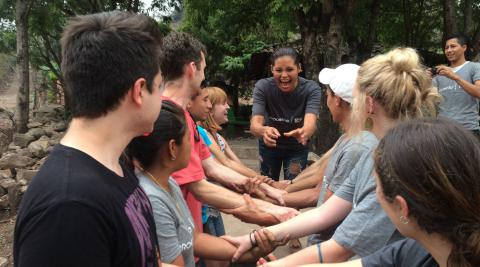
A Progressio development worker talks with a group of women about the living with HIVDevelopment worker Philemon Handinahama (red shirt) leading a HIV workshop in Zimbabwe. Photo © Marcus Perkins/Progressio

Poverty is about real people. So we work through people and alongside people, giving practical support in a spirit of partnership.

We place highly-skilled development workers with grassroots organisations in developing countries. Our development workers range from agroecologists to urban planners, from business advisers to communications experts, from human rights activists to HIV specialists. They bring skills and expertise in the development areas we specialise in: governance, environment and HIV.

Our development workers usually stay for at least two years – and longer if needed. They are there to make a long term, lasting impact.

They build the skills of the people they work with. And together, they set up and deliver projects that empower ordinary people: farmers, women, community leaders, people living with HIV. These projects give ordinary people the power to improve their own lives – now and in the future.

Where we work

We currently work in 11 countries.

Post-conflict countries, where people are struggling to overcome poverty and rebuild lives in the shadow of previous conflict and present-day instability: El Salvador, Nicaragua, Somaliland, Timor-Leste and Zimbabwe.

And countries where inequality is entrenched and poverty, for many people, is extreme: Honduras, Malawi, Peru and Yemen.

In the Caribbean, our work has in recent years focused on the needs of people of Haitian descent living in the Dominican Republic. Following the earthquake in Haiti in January 2010, we played a key role in coordinating relief efforts – and we will continue to send development workers to Haiti to help with the long term work of rebuilding shattered lives and communities.

We ended our country programme in Ecuador in 2010. After 36 years of working there, we believe Ecuador’s people are now in a better position to continue to build on their own achievements in tackling poverty and ending injustice.

What we say

People are not poor by choice. They are made poor by their lack of choices and opportunities. Poverty is about power – so we work to challenge the things that keep people poor.

That means helping our partner organisations build the skills and networks that enable them to argue for policy change in their countries. And it means listening to the needs of our partners, and drawing on our experience in the countries where we work, to argue for change internationally.

So – for example – when we see small-scale farmers struggling with environmental degradation and the consequences of global warming, we campaign against illegal logging (which devastates the livelihoods of people in poor communities) and we campaign for action on climate change.

In all our work, we mobilise people to act – because every step, however small, gives people more power to bring about lasting change.